Comprehensive Real Estate Market Analysis Proposal
Role:
Python & Power Bi
Date:
Winter 2023
Context and Objective
This proposal presents a detailed analysis of a real estate dataset with the goal of deriving actionable insights applicable to real-world scenarios in the real estate market. The project is a blend of theoretical data analysis and practical market strategies, focusing on key aspects such as property valuations, market trends, and buyer preferences. Through this analysis, we aim to provide a data-driven foundation for understanding and predicting market movements, thereby aiding stakeholders in making informed decisions.
Project Significance
The dataset selected for this analysis offers a detailed snapshot of the real estate market, encompassing a wide range of property types and locations. This diversity makes the dataset a representative microcosm of the real estate market’s complexities and nuances. Key features within the dataset include:
- Property Characteristics: Size, type, condition, age.
- Financial Aspects: Listing and sale prices.
- Location Details: Geographic data including city and neighborhood specifics.
- Additional Features: Amenities such as parking and landscape features.
By analyzing these aspects, the project aims to mirror the decision-making process in real estate, offering insights into:
- Market Dynamics: Understanding how various factors influence property prices and sales trends.
- Investment Opportunities: Identifying potential areas for investment based on current market trends.
- Buyer and Seller Behavior: Unraveling the preferences and motivations of different market participants.
The significance of this analysis lies in its potential to inform a range of strategic decisions, from property development and pricing strategies to investment and marketing approaches. Moreover, the insights gained from this analysis can also contribute to broader economic understanding and policy-making in the context of urban development and housing markets.
Data Selection
The dataset selected for this analysis was meticulously chosen for its comprehensive and realistic portrayal of the real estate market. It stands out due to its structured and detailed representation of key market variables, such as:
- Property Attributes: Details like size, type, condition, and age of properties.
- Financial Information: Data on listing and sale prices.
- Geographic Specifics: Location information including city, neighborhood, and proximity to key amenities.
- Additional Features: Amenities and other unique property characteristics.
This rich dataset provides a solid foundation for a detailed and authentic analysis of the real estate market.
Objective Setting
The primary objectives of this project are multifold, focusing on:
- Analyzing Price Influencers: Determining the key factors that impact property values, such as location, property size, and unique features.
- Understanding Buyer Behavior: Studying patterns in buyer preferences and purchasing decisions to glean insights into consumer behavior in the real estate market.
These objectives are aimed at providing a thorough understanding of the dynamics at play in the real estate market, offering valuable insights for various stakeholders.
Methodological Rigor
The project adopts a comprehensive methodological approach, encompassing:
Data Cleaning and Preparation: Ensuring data quality and consistency by addressing issues such as missing values, outliers, and data format inconsistencies.
Exploratory Data Analysis (EDA): Conducting a deep dive into the dataset to understand basic statistics, distributions, and relationships among variables. This includes visualizing data trends and patterns using various charting techniques.
Predictive Modeling with Machine Learning: Employing advanced machine learning algorithms to predict market trends and property valuations. Techniques like regression analysis, RandomForestRegressor, and other sophisticated models will be used to understand and forecast market behavior.
Validation and Evaluation: Rigorously testing and validating the models using appropriate metrics such as R-squared, Mean Squared Error (MSE), and others to ensure reliability and accuracy of the predictions
Project Scope and Deliverables
Data Preprocessing
The first stage of the project focuses on preparing the dataset to ensure high data quality and consistency. This phase includes:
- Data Cleaning: Identifying and rectifying issues such as missing values, outliers, and inconsistent entries.
- Data Standardization: Ensuring uniformity in the dataset, particularly for geographical and financial data, to facilitate accurate analysis. This includes standardizing formats and units across different data types.
- Data Transformation: Converting data into formats suitable for analysis, such as categorizing continuous variables or creating derived variables for deeper insights.
Exploratory Analysis
A thorough exploratory analysis will be conducted to understand the underlying patterns and trends in the dataset:
- Trend Analysis: Investigating property price trends over time, considering factors like location, property type, and market conditions.
- Regional Market Analysis: Assessing performance across different regions to identify areas of high growth or potential risks.
- Demographic Insights: Analyzing buyer demographics to understand market segments, buyer preferences, and purchasing behaviors.
- Correlation Study: Examining the relationships between various variables and how they influence property prices.
Advanced Visualization with Power BI
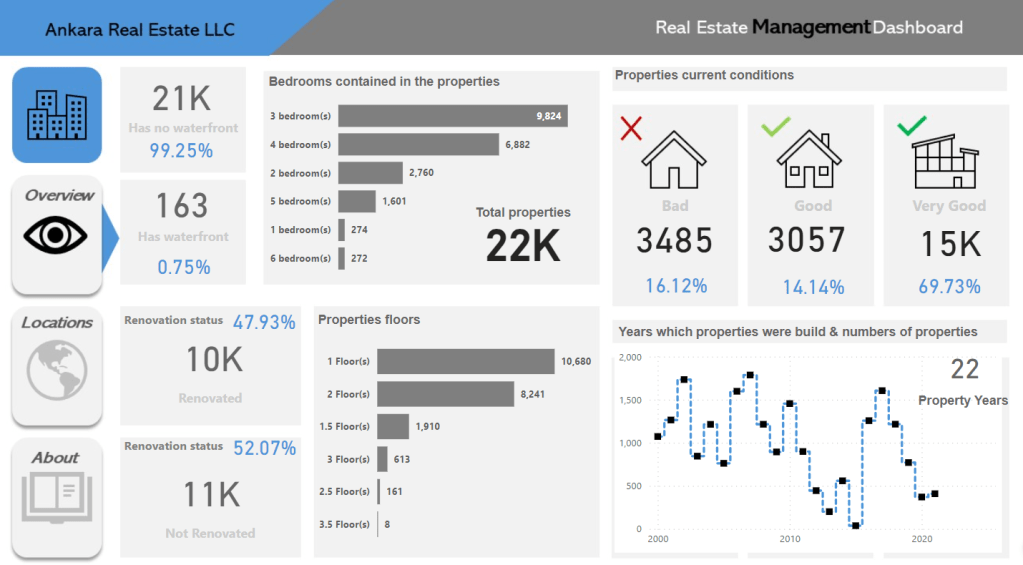
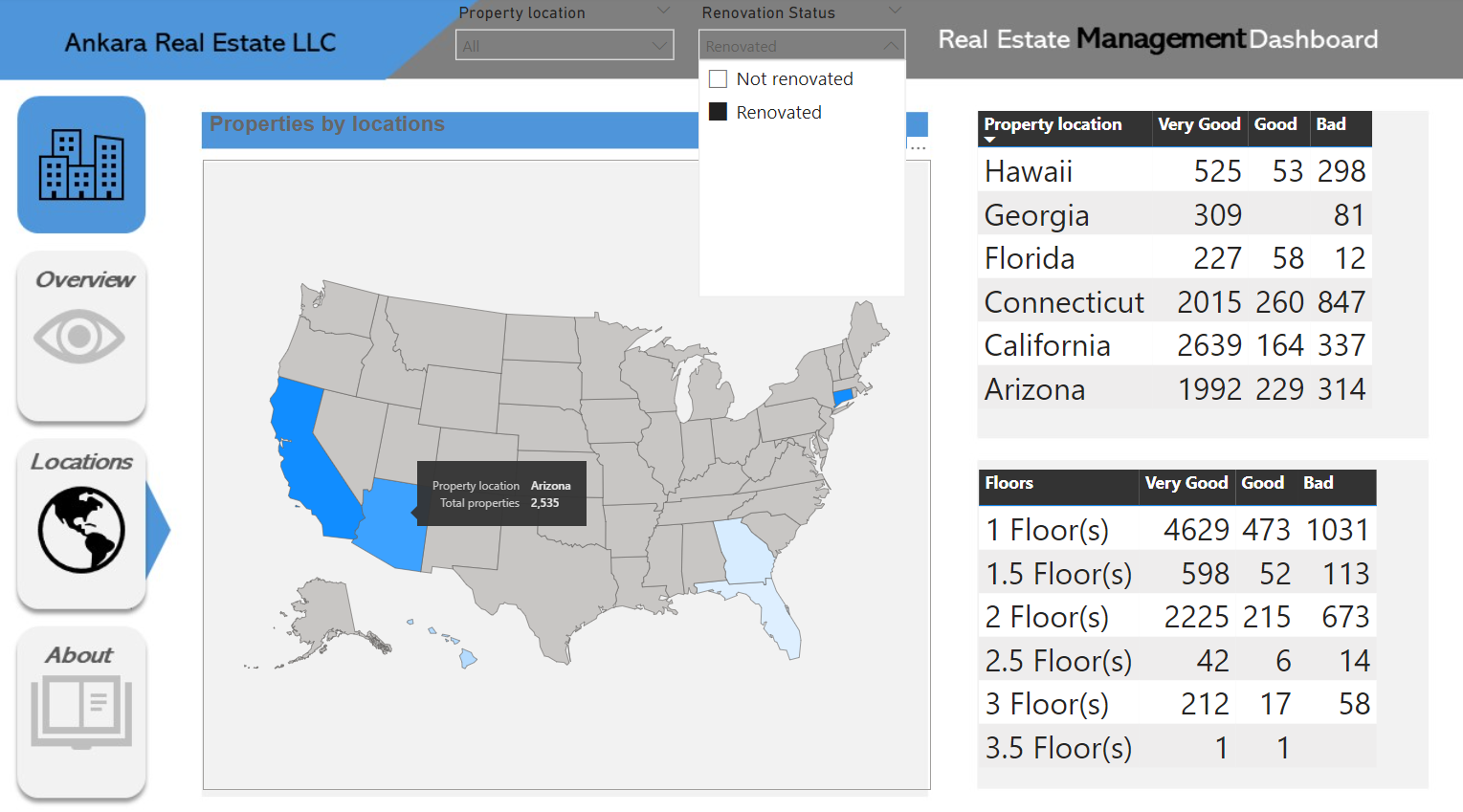
An interactive and user-friendly dashboard will be developed using Power BI, featuring:
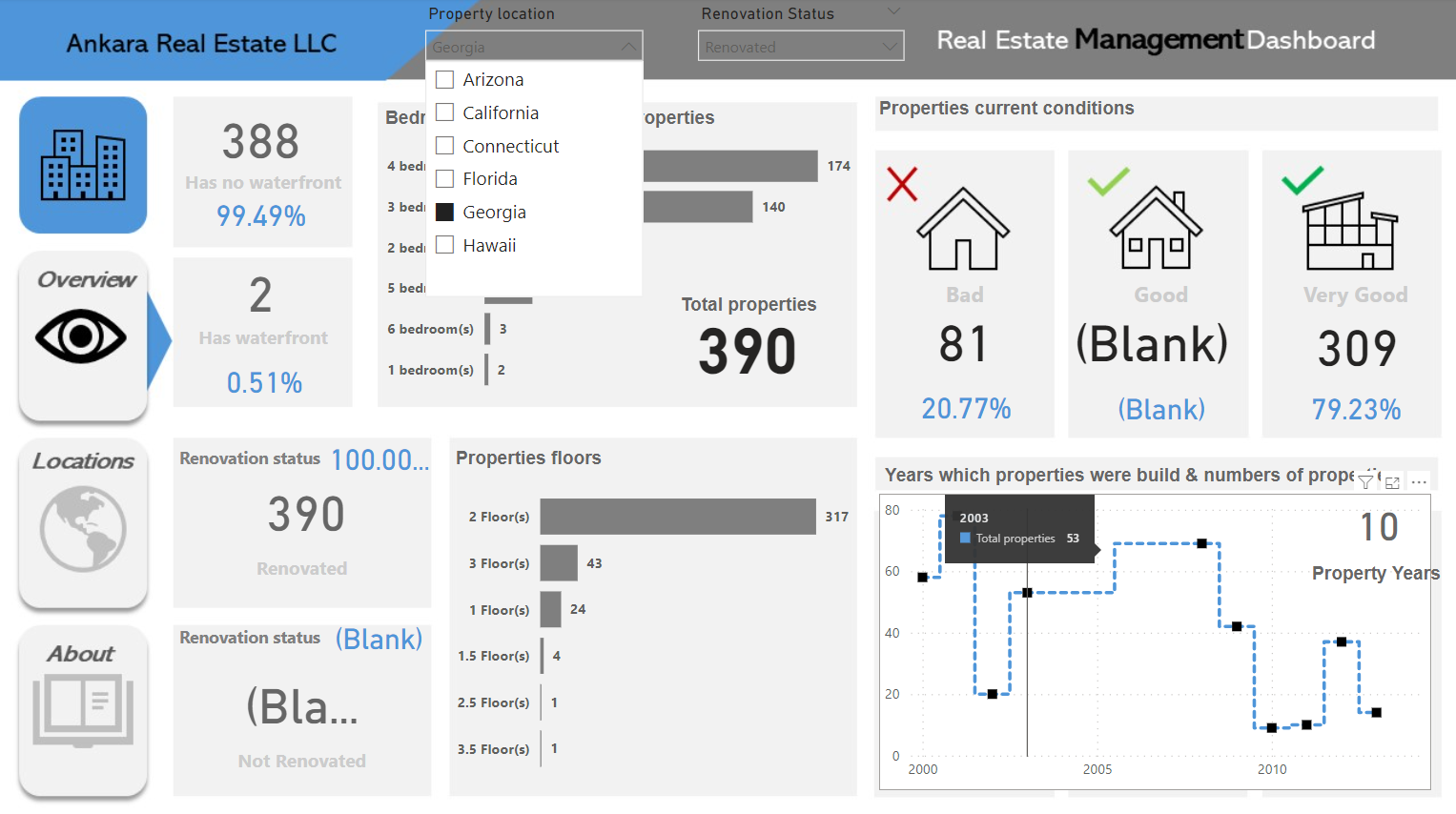
- Dynamic Visualizations: Creating charts, maps, and graphs that provide intuitive insights into complex real estate data.
- Interactive Elements: Incorporating filters, slicers, and other interactive tools to allow users to explore the data in various dimensions.
- Customized Reports: Designing tailored reports and visualizations to highlight key findings and trends identified during the exploratory analysis.
Predictive Analytics
The project will leverage advanced machine learning models to predict future market trends:
- Model Development: Building predictive models using techniques like regression analysis, RandomForestRegressor, and other algorithms suited for real estate data.
- Performance Evaluation: Rigorously testing the models against key performance indicators such as accuracy, precision, and recall.
- Future Trend Forecasting: Applying the models to predict future market trends, property valuations, and potential investment opportunities.
Approach and Methodology
Data Preparation and Exploration
The foundation of the project lies in meticulous data preparation and exploration, ensuring a reliable base for further analysis:
- Data Cleaning: Rigorous cleaning to address missing values, outliers, and anomalies. This step is crucial for maintaining data quality.
- Data Standardization: Standardizing formats, especially for geographical and financial data, to ensure uniformity across the dataset.
- Data Transformation: Converting raw data into a more analytically suitable format, including categorization and creation of new derived variables for comprehensive analysis.
Exploratory Data Analysis
A detailed exploratory analysis will be conducted to uncover underlying patterns and trends:
- Trend Analysis: Identifying and interpreting trends over time in property prices and sales volumes.
- Regional Market Analysis: Evaluating performances across different regions to highlight growth areas and identify market disparities.
- Buyer Behavior Patterns: Examining buyer demographics and behavior to understand market demand and preferences.
- Correlation and Causation Analysis: Investigating relationships between different variables to understand how they influence property prices and sales.
Power BI Visualization and Analysis
The project will utilize Power BI for advanced data visualization and analysis:
- Defining Analytical Requirements: Determining the key metrics and insights to be featured in the Power BI dashboard.
- Data Loading and Cleansing with Power Query Editor: Utilizing Power BI’s Power Query Editor for efficient data importing, cleaning, and transformation.
- Data Modeling and DAX Application: Creating a robust data model and using Data Analysis Expressions (DAX) for complex calculations and measures.
- KPI Measures and Visualizations: Developing various DAX measures for key performance indicators and creating dynamic visualizations to represent these metrics effectively.
- Advanced Dashboard Features: Incorporating features like conditional formatting, interactive filters, and custom backgrounds using PowerPoint to enhance the dashboard’s usability and visual appeal.
Predictive Modeling with Machine Learning
The project will incorporate predictive modeling to forecast future market trends:
- Model Implementation: Developing predictive models such as RandomForestRegressor, known for its effectiveness in regression tasks.
- Model Evaluation: Assessing model performance using metrics like R-squared and Mean Squared Error (MSE) to ensure accuracy and reliability of the predictions.
- Insights for Future Trends: Utilizing the model outputs to provide insights into future market trends, aiding in strategic decision-making for stakeholders.
Through this comprehensive approach and methodology, the project aims to deliver a multi-dimensional analysis of the real estate market, combining traditional data analysis techniques with advanced tools and technologies. This will provide a deep and nuanced understanding of the market, essential for data-driven decision-making in the real estate sector.
Key Insights and Findings
Statistical Overview
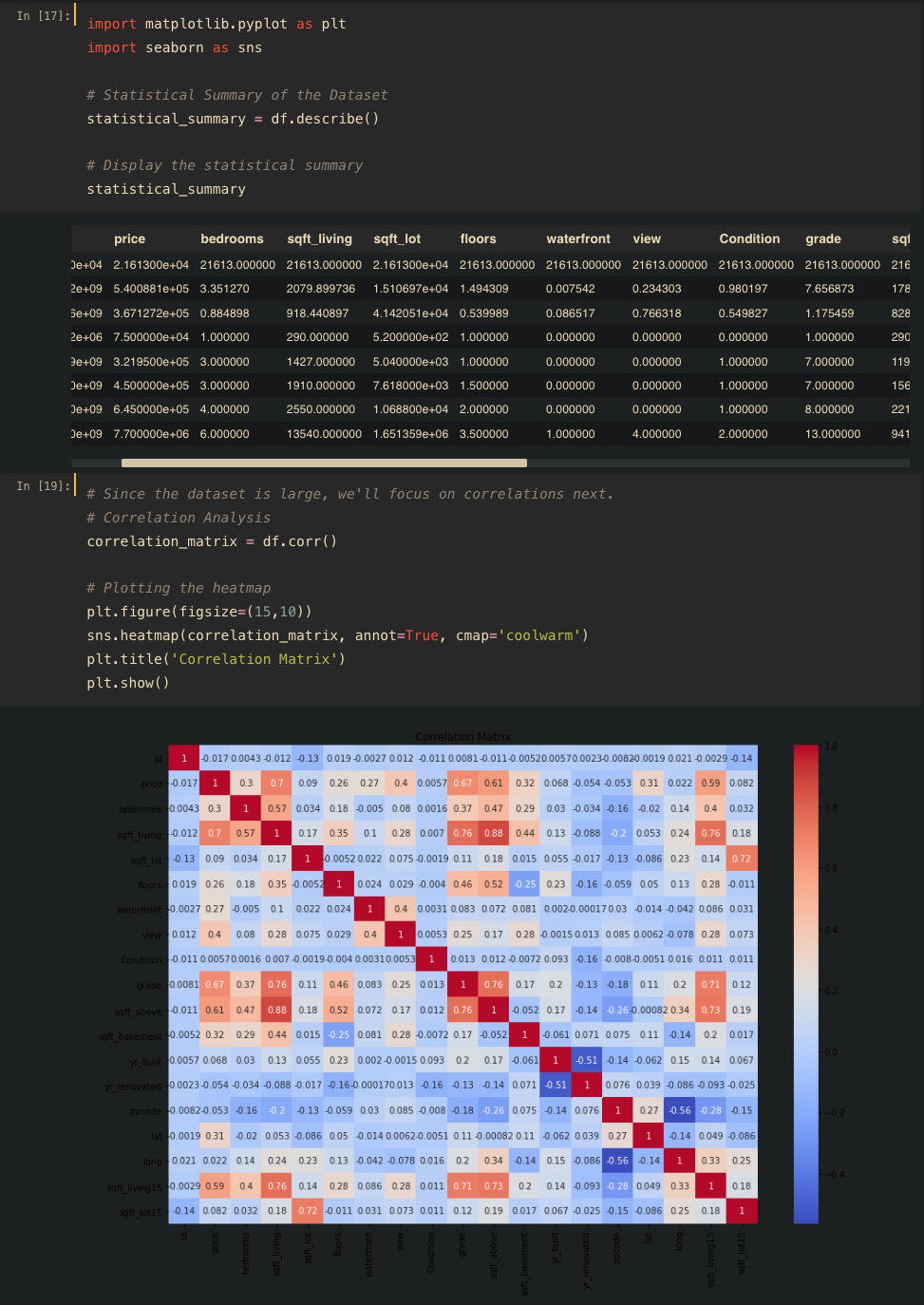
- Dataset Composition: The dataset consists of 21,613 properties, providing a comprehensive overview of the real estate market.
- Average Property Price: The average price of properties in the dataset is approximately $540,088, indicating the market’s price range and positioning.
- Living Space: The mean square footage of living space is around 2,080 sqft, highlighting the average property size within the dataset.
Price Correlations
- Strong Positive Correlations: The analysis reveals strong positive correlations between property price and several key features:
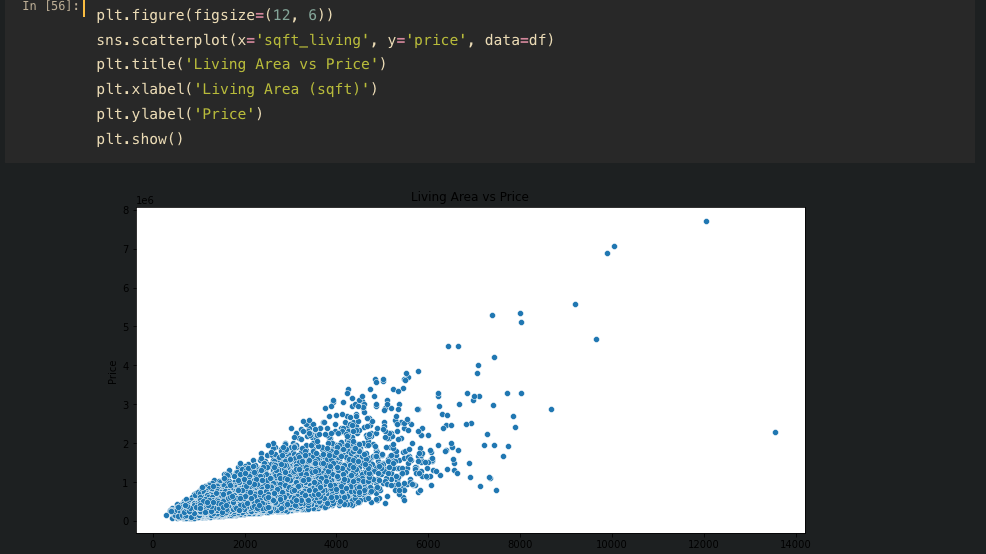
sqft_living(0.70): Suggesting that larger living spaces tend to command higher prices.grade(0.67): Indicating that properties with higher grades, reflecting better overall quality and design, are priced higher.sqft_above(0.61): Showing that the size of the above-ground living area significantly impacts property pricing.
- These correlations provide valuable insights into the factors most strongly influencing property valuations.
Property Features
- Significant Features: Other property features like the number of bedrooms, whether the property is waterfront, and the quality of the view, also show notable correlations with price. This underscores their importance in property valuation and buyer decision-making processes.
Market Trends
- Size and Quality Relationship: An initial analysis suggests a direct and significant relationship between the size and quality of a property and its pricing. This trend is crucial for understanding market dynamics and forecasting future price movements.
Recommendations and Future Steps
- Strategic Marketing and Investment Plans:
- Utilize these insights to develop targeted marketing strategies, focusing on properties with features that command higher prices.
- Guide investment decisions by identifying properties and areas that align with current market trends and buyer preferences.
- Continuous Model Updating:
- Regularly update the predictive models with new data to ensure their ongoing accuracy and relevance.
- Adapt the models to market changes, ensuring they remain effective tools for forecasting and analysis.
- Adaptation of Analytical Techniques:
- Continuously refine analysis techniques to stay aligned with evolving market conditions and emerging trends.
- Incorporate new data sources and methodologies as they become available to enhance the depth and breadth of the analysis.

 Metin Saldırış